

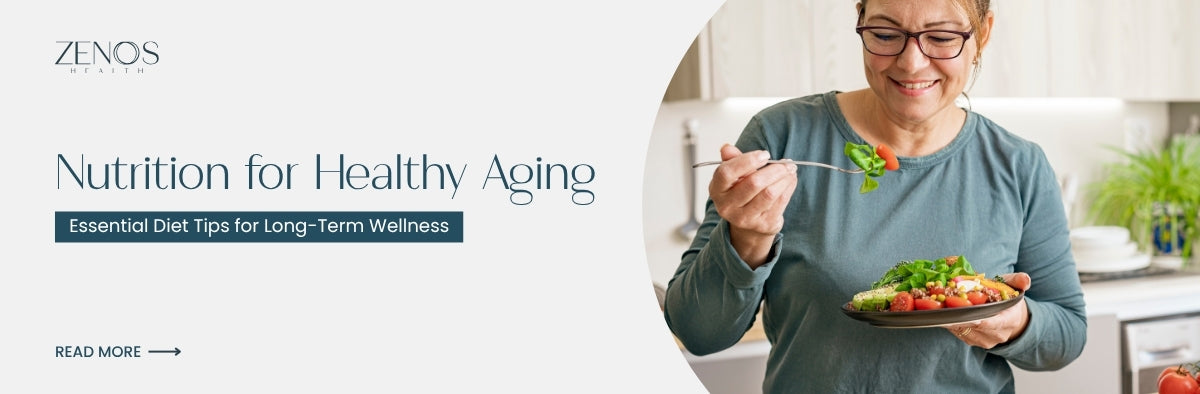

A 2025 Nature Medicine study following 105,015 participants for up to 30 years found that higher adherence to healthy dietary patterns was consistently associated with greater odds of healthy aging across cognitive, physical, and mental health domains. (1)
The Mediterranean diet reduced cardiovascular risk by 22% and the odds of cognitive decline by 28% in a meta-analysis of 35 RCTs. (2)
Nutrition tips for healthy aging center on five pillars: anti-inflammatory foods, adequate protein, antioxidant-rich produce, gut-supportive fiber, and targeted cellular nutrition.
Combining a healthy aging diet with other lifestyle factors (exercise, sleep, stress management) could extend disease-free life expectancy by 8 to 10 years. (3)
Specific compounds like urolithin A, NAC, spermidine, and resveratrol support cellular mechanisms of aging including autophagy, mitochondrial health, and oxidative stress reduction.
You cannot reverse aging. But you can influence how you age, and what you eat is one of the most powerful tools at your disposal. The connection between diet and healthy aging is not theoretical. It is backed by some of the largest, longest-running studies in nutritional science.
A 2025 study in Nature Medicine tracked over 105,000 people for up to 30 years and found that adherence to healthy dietary patterns was consistently associated with greater odds of healthy aging, defined as maintaining cognitive function, physical capability, mental health, and freedom from chronic disease past age 70. (1)
This guide covers the essential nutrition tips for preventing age-related diseases, drawn from systematic reviews, meta-analyses, and long-term cohort data. Whether you are in your 30s building habits or in your 60s optimizing outcomes, the dietary choices you make today directly shape how your body and brain function tomorrow.
A diet for healthy aging is not a short-term eating plan. It is a long-term nutritional pattern that reduces inflammation, supports cellular repair, maintains muscle mass, protects brain function, and lowers the risk of chronic diseases like cardiovascular disease, type 2 diabetes, neurodegeneration, and certain cancers.
Hu (2024), in a comprehensive epidemiological review from Harvard’s T.H. Chan School of Public Health, identified several dietary patterns consistently associated with longevity and disease prevention, including the Mediterranean diet, the DASH diet, the MIND diet, and healthful plant-based dietary patterns. (3) These share common principles: predominance of whole, minimally processed plant foods; healthy fats from olive oil, nuts, and fish; adequate protein; and minimal ultra-processed food intake.
The emphasis on diet and healthy aging is not about restriction. It is about choosing foods that provide the raw materials your cells need to function, repair, and defend themselves against the damage that accumulates over time. Ingredients used in formulations like CellZen from Zenos Health target these cellular mechanisms directly, complementing what a healthy diet provides.
Here are five nutrition tips for healthy aging.
Chronic low-grade inflammation, sometimes called “inflammaging,” is a central driver of age-related disease. It damages blood vessels, accelerates neurodegeneration, impairs insulin signaling, and weakens immune function. Your diet is one of the most direct ways to modulate this process.
The Mediterranean diet, which is rich in olive oil, fatty fish, leafy greens, nuts, and colorful vegetables, reduced cardiovascular risk by 22% in a systematic review of 35 RCTs. (2) This healthy aging diet works largely through anti-inflammatory and antioxidant mechanisms.
Omega-3 fatty acids (salmon, sardines, mackerel, walnuts, flaxseeds) directly suppress inflammatory cytokine production.
Extra virgin olive oil contains oleocanthal, a compound with anti-inflammatory properties comparable to low-dose ibuprofen.
Leafy greens and cruciferous vegetables (spinach, kale, broccoli, Brussels sprouts) provide sulforaphane and other compounds that activate your body’s antioxidant defense pathways.
Berries (blueberries, strawberries, blackberries) are rich in anthocyanins, polyphenols with documented neuroprotective and anti-inflammatory effects.
Sarcopenia (age-related loss of muscle mass and strength) begins as early as your 30s and accelerates after 60. Adequate protein intake is the primary nutritional defense against this process.
The systematic review by Coelho-Júnior et al. (2022) confirmed that higher protein intake is associated with better physical function in older adults. (4) Current evidence supports 1.0 to 1.2 g of protein per kg of body weight per day for healthy older adults, rising to 1.2 to 1.6 g per kg for those who are physically active or recovering from illness.
Distribute protein across meals. Aim for 25 to 40 g per meal across three to four meals daily. This pattern optimizes muscle protein synthesis (the process of building new muscle tissue) more effectively than loading all your protein into one meal.
Include leucine-rich sources. Leucine (found in eggs, dairy, poultry, and fish) is the amino acid that most directly triggers muscle protein synthesis.
Combine with resistance training. Protein intake and resistance exercise are synergistic for muscle preservation. Neither is as effective alone.
Oxidative stress, caused by an imbalance between free radical production and your body’s antioxidant defenses, damages DNA, proteins, and cell membranes. This cumulative damage is a hallmark of aging.
A systematic review of 49 studies found that higher dietary diversity was associated with lower cognitive and physical frailty, reduced sleep disturbances, fewer mental health disorders, and better nutritional status in older adults. (5)
Aim for five or more servings of vegetables and two or more servings of fruit daily. Variety matters: different colors provide different antioxidant compounds.
Emphasize polyphenol-rich foods: green tea, dark chocolate, berries, red grapes, turmeric, and pomegranate. These compounds support cellular defense pathways and have been linked to reduced cardiovascular and neurodegenerative risk.
Your gut microbiome (the community of trillions of bacteria in your digestive tract) influences inflammation, immune function, nutrient absorption, mood, and even cognitive function through the gut-brain axis. The composition of your microbiome changes with age, and diet is the primary modulator.
A healthy aging diet should include:
Prebiotic fiber (onions, garlic, asparagus, oats, bananas) that feeds beneficial bacteria and promotes the production of short-chain fatty acids (SCFAs), compounds that protect your intestinal lining and reduce systemic inflammation.
Fermented foods (yogurt, kefir, kimchi, sauerkraut, miso) that introduce beneficial bacteria directly into your digestive tract.
Adequate total fiber intake of 25 to 30 g per day, which most adults do not achieve. Fiber supports gut motility, blood sugar regulation, and satiety.
For targeted gut support, GutZen provides SunFiber® guar fiber (7000 mg), glutamine (5000 mg) for gut barrier integrity, BIOMEnd® Butyrate (1000 mg) as a direct postbiotic source of the SCFA butyrate, and DE111® (Bacillus subtilis) probiotic for microbiome support.
Beyond macronutrients and micronutrients, specific compounds support the cellular processes that slow aging at the molecular level. These are important nutrition tips for preventing age-related diseases because they address the root mechanisms, not just the symptoms:
Autophagy support. Autophagy is your body’s cellular recycling system, clearing out damaged proteins and organelles so cells can function efficiently. Compounds like spermidine (found in wheat germ, aged cheese, and mushrooms) and fasting-mimicking approaches activate this process.
Mitochondrial health. Your mitochondria (the energy-producing structures inside every cell) decline in efficiency with age. Urolithin A, a compound produced by gut bacteria from ellagitannins in pomegranate, supports mitophagy (the selective removal of damaged mitochondria).
NAD+ support. NAD+ (nicotinamide adenine dinucleotide) is a coenzyme critical for energy metabolism and DNA repair. NAD+ levels decline with age. CellZen includes MonaJuventa Nu®, a branded compound that supports NAD+ optimization. BrainZen takes a complementary approach with nicotinamide riboside (1000 mg), a direct NAD+ precursor.
Glutathione optimization. Glutathione is your body’s master antioxidant. N-acetyl cysteine (NAC) provides the cysteine needed for glutathione synthesis.
Senescent cell clearance. Senescent cells (sometimes called “zombie cells”) stop dividing but remain metabolically active, secreting inflammatory compounds that damage surrounding tissue. Senolytics like fisetin and quercetin promote the clearance of these cells.
Clinical Note: While diet provides the foundation for healthy aging, the concentrations of certain cellular-support compounds available through food alone are often insufficient for therapeutic effect. This is where targeted supplementation fills the gap. (3)
A diet for healthy aging is defined as much by what you limit as by what you include. The following dietary patterns are consistently associated with accelerated aging, increased disease risk, and earlier mortality: (1, 3)
Ultra-processed foods. Associated with increased inflammation, impaired glucose metabolism, cognitive decline, and reduced grip strength (a marker of biological aging) in multiple cohort studies.
Excess red and processed meat. Hu’s 2024 review found that reducing red meat intake to less than half a serving per day could prevent 9.3% of deaths in men and 7.6% in women. (3)
Added sugars and refined carbohydrates. These drive insulin resistance, promote glycation (the bonding of sugar molecules to proteins, which damages tissue), and accelerate skin and vascular aging.
Excessive alcohol. Even moderate alcohol consumption is increasingly associated with negative health outcomes as research methodology improves. Limit to one drink per day or less.
Trans fats. Found in some processed foods and partially hydrogenated oils. Associated with significantly increased mortality risk. (3)
CellZen was formulated to support the cellular mechanisms of healthy aging described in this article. It combines research-backed compounds that target autophagy, mitochondrial health, oxidative stress, senescent cell clearance, and metabolic optimization:
Urolithin A (1000 mg): Supports mitophagy, the selective clearance of damaged mitochondria, to maintain cellular energy production.
N-Acetyl Cysteine (1000 mg): Provides the rate-limiting precursor for glutathione synthesis, supporting your body’s master antioxidant system.
Palmitoylethanolamide (600 mg) and Oleoylethanolamide (400 mg): Endocannabinoid-related compounds that support inflammatory balance and metabolic signaling.
ReserveNature® (300 mg): A branded resveratrol compound that activates SIRT1, a longevity-associated protein involved in DNA repair and cellular stress response.
Spermidine (50 mg): A polyamine that promotes autophagy, your body’s cellular recycling process.
Fisetin (50 mg): A flavonoid with senolytic properties, supporting the clearance of senescent cells.
GlucoVantage® (300 mg): Supports glucose metabolism and insulin sensitivity.
MonaJuventa Nu® (100 mg): A branded compound that supports NAD+ optimization, addressing the age-related decline in this critical coenzyme for energy metabolism and DNA repair.
MitoPrime® Ergothioneine (10 mg): A rare amino acid with potent antioxidant properties concentrated in mitochondria-rich tissues.
For brain-specific aging support, BrainZen combines Cognizin® citicoline, phosphatidylserine, and nicotinamide riboside for cognitive preservation. For gut health, GutZen supports microbiome integrity and gut barrier function.
Browse the Longevity collection for comprehensive cellular aging support.





Leave a comment
Comments will be approved before showing up.