

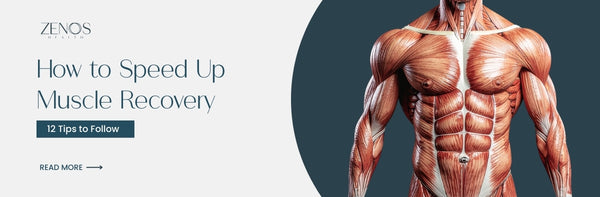

You finished your workout yesterday, and now every movement reminds you of it. Sitting down hurts. Stairs feel impossible. That familiar ache in your quads, shoulders, or glutes tells you something happened in those muscle fibers, and now your body is working overtime to repair them.
This delayed onset muscle soreness (DOMS) typically peaks 24 to 72 hours after exercise. For women managing busy schedules, hormonal fluctuations, and training goals, prolonged soreness can derail consistency. The real question is not whether you will experience soreness, but how to eliminate muscle soreness after exercise efficiently so you can return to training.
Research published in the Journal of Strength and Conditioning Research demonstrates that optimizing recovery directly impacts strength gains, endurance, and injury prevention. The strains and formulations used in clinically designed supplements like those from Zenos Health support these recovery pathways at a cellular level.
When you exercise, microscopic tears form in muscle fibers. Your body responds by triggering an inflammatory response that initiates repair. Satellite cells activate, protein synthesis increases, and over time, muscles rebuild stronger than before. Systematic reviews indicate this process requires specific nutrients, adequate rest, and optimal conditions to proceed efficiently.
Without proper recovery protocols, you risk chronic fatigue, decreased performance, and increased injury susceptibility. Here is how to boost muscle recovery using evidence-based strategies.
The following strategies combine nutrition, lifestyle adjustments, and targeted supplementation to accelerate your body's natural repair processes. Each approach is supported by clinical evidence and can be implemented immediately. Whether you are recovering from strength training, endurance work, or high-intensity intervals, these methods apply across training modalities.
Human studies show that consuming 20 to 40 grams of protein within two hours post-exercise accelerates muscle protein synthesis. Leucine-rich sources like whey, eggs, and lean meats provide the amino acids essential for repair. Clinical trials confirm that distributing protein intake across meals optimizes recovery better than loading it into one sitting.
Growth hormone release peaks during deep sleep, making rest non-negotiable for fast muscle recovery. Sleep deprivation reduces protein synthesis by up to 18% and increases cortisol, which breaks down muscle tissue. Create a consistent sleep schedule and limit screen exposure before bed to maximize recovery.
Dehydration impairs nutrient delivery to damaged muscles and slows waste removal. Aim for half your body weight in ounces daily, increasing intake on training days. Electrolyte balance matters too, as sodium, potassium, and magnesium support cellular hydration and muscle function.
Ice baths and cold water immersion reduce inflammation and perceived soreness. A cold bath provides optimal benefits. Cold exposure constricts blood vessels, reducing swelling and helping you understand how to heal muscles faster through decreased inflammation.
Light movement on rest days increases blood flow without adding training stress. Walking, swimming, or gentle yoga promotes nutrient delivery to muscles while clearing metabolic waste. This approach supports quick muscle recovery better than complete inactivity and demonstrates how to boost muscle recovery through strategic low-intensity activity.
Certain supplements demonstrate measurable effects on muscle recovery after exercise. Creatine replenishes ATP stores and reduces muscle damage markers. Targeted formulations like MuscleZen from Zenos Health provide a hormone-free approach to supporting healthy skeletal muscle, strength, and endurance. When asking what supplements are good for muscle recovery, evidence-based formulations with clinically studied doses consistently outperform generic options.
[[product:musclezen-muscle-recovery-and-building-supplement]]
Foam rolling increases blood flow to targeted areas and reduces muscle stiffness. Studies indicate 10 to 15 minutes of rolling post-workout decreases soreness intensity and improves range of motion within 24 hours. Focus on the major muscle groups worked during training.
Tart cherry juice, fatty fish, and turmeric demonstrate measurable effects on reducing exercise-induced inflammation. These foods contain compounds that modulate inflammatory pathways, supporting natural recovery processes. Include omega-3-rich sources regularly to see cumulative benefits.
Proper preparation and gradual cool-downs reduce the severity of post-exercise soreness. Dynamic stretching before training primes muscles for work, while static stretching afterward helps return them to resting length. These habits directly influence how to speed up muscle recovery.
Chronic stress elevates cortisol, which inhibits muscle repair and promotes breakdown. Mindfulness practices, adequate downtime, and stress management techniques support the hormonal environment necessary for optimal recovery. Reducing psychological stress creates conditions where your body can prioritize repair over survival responses.
Mitochondria power the recovery process at a cellular level. Supporting mitochondrial function enhances ATP availability for repair and regeneration. B vitamins, CoQ10, and magnesium all contribute to efficient energy production. Addressing recovery at this fundamental level accelerates the entire repair cascade.
Consistent supplementation with targeted formulations bridges nutritional gaps that diet alone may not cover. Rather than sporadic use, daily intake of muscle-supporting nutrients creates a baseline that enhances recovery capacity over time. This systematic approach addresses what helps with muscle recovery through sustained, measurable support.
When selecting supplements for recovery, clinical backing matters. MuscleZen from Zenos Health delivers each ingredient at clinically studied doses demonstrated to be effective in human trials, not underdosed for cost savings. The formulation contains no proprietary blends hiding ineffective amounts, so you know exactly what you are taking and at what dose. Independent third-party testing confirms identity, potency, and purity of every batch. Unlike many muscle supplements, MuscleZen takes a hormone-free approach, making it suitable for women across all life stages without concerns about hormonal interference.
If you are serious about understanding how to speed up muscle recovery, MuscleZen provides the research-backed support your training deserves.






Leave a comment
Comments will be approved before showing up.