


You have probably seen retinol on the ingredient list of every serum, moisturizer, and anti-aging product on the market. Retinol is a form of vitamin A, and the reason it shows up so often is simple: few nutrients have as much clinical evidence supporting their role in skin health.
But vitamin A and skin health is not just a topical story. What you put in your body matters just as much as what you put on it. Adequate vitamin A intake supports cell turnover, collagen production, barrier function, and skin repair from the inside out. Deficiency, on the other hand, can show up as dry, rough, dull skin that ages faster than it should [1].
Here is what the research actually says about the vitamin A benefits for skin, how to use it safely, and what to watch out for.
Vitamin A is a fat-soluble nutrient that your body uses in two primary forms: preformed vitamin A (retinoids, including retinol and retinyl palmitate) from animal sources and supplements, and provitamin A (beta-carotene) from plant-based foods like carrots, sweet potatoes, and spinach [1].
Once in your body, vitamin A is converted into retinoic acid, the active form that directly influences skin cell behavior. Retinoic acid signals skin cells to divide and differentiate, essentially telling old, damaged cells to move aside and make room for new, healthy ones. What does vitamin A do for skin at a deeper level? It regulates gene expression in both the epidermis (outer skin layer) and dermis (deeper layer where collagen lives), making it one of the few nutrients that influences skin structure from the cellular level up [2].
Vitamin A in skin care has been studied extensively, both as a topical treatment and as an oral nutrient. Here are the key benefits supported by clinical and preclinical evidence.
Your skin replaces itself roughly every 28 days, shedding old cells from the surface while new cells form underneath. As you age, that cycle slows down, leaving dull, uneven skin that takes longer to recover from damage.
How vitamin A helps: Vitamin A accelerates epidermal cell turnover by signaling basal layer cells to proliferate faster [2]. The result is fresher, smoother skin that reflects light more evenly. Retinoids also help prevent dead skin cells from clumping together and clogging pores, which is why dermatologists frequently recommend them for both aging and acne-prone skin.
Collagen is the structural protein that keeps skin firm, plump, and resilient. After your mid-20s, collagen production gradually declines, and UV exposure accelerates that loss by activating enzymes called matrix metalloproteinases (MMPs) that break collagen down.
What the research shows: Studies have demonstrated that vitamin A derivatives stimulate collagen synthesis while simultaneously inhibiting the enzymes responsible for collagen degradation [2][3]. A peer-reviewed study found that retinol application increased the expression of collagen type I and type III genes, with corresponding improvements in skin structure [4]. For women noticing early fine lines or loss of firmness, supporting collagen from both the inside and outside is a practical strategy.
Acne is not just a teenage concern. Hormonal shifts, stress, and environmental factors can trigger breakouts well into adulthood. Vitamin A addresses several of the mechanisms behind acne simultaneously.
Vitamin A and acne: Retinoids promote cell turnover, which prevents dead skin cells and sebum from accumulating in pores. The American Academy of Dermatology recommends topical retinoids as a first-line treatment for both adolescent and adult acne [5]. Oral vitamin A, in adequate amounts, also supports the skin's ability to regulate oil production and maintain clearer pores from within.
Hyperpigmentation, dark spots, and uneven skin tone are common concerns, especially for women who have experienced sun damage, hormonal changes, or post-inflammatory marks from acne.
How vitamin A helps with tone: Retinoids promote faster turnover of pigmented surface cells, gradually replacing darker, damaged cells with newer ones. Research has also shown that vitamin A can modulate the expression of genes involved in melanin production, helping to reduce the appearance of dark spots over time [2]. Consistent intake of vitamin A through diet or supplementation works alongside topical treatments to support an even, radiant complexion.
Your skin barrier is the outermost defense against moisture loss, pollution, bacteria, and irritants. When that barrier is compromised, skin becomes dry, sensitive, and prone to irritation.
Vitamin A and barrier function: Vitamin A supports the production of new epidermal cells that form a stronger, more cohesive barrier. Deficiency in vitamin A has been directly linked to dry, rough skin and impaired wound healing [1]. Adequate intake helps maintain the barrier's integrity, keeping moisture in and environmental stressors out.
Topical retinoids and oral vitamin A work through different pathways, and both play a role in comprehensive skin health. Topical vitamin A delivers retinoic acid directly to the skin's surface, producing visible improvements in texture, wrinkles, and tone over weeks of consistent use [3]. However, topical products only reach the outer layers.
Oral vitamin A, whether from food or supplements, supports skin health systemically. Your body distributes it to skin cells from the bloodstream, supporting cell turnover, immune function, and tissue repair across the entire body. For women who want to address skin health from the inside out, oral vitamin A, particularly in its preformed retinyl palmitate form, ensures that the skin's deeper layers receive the nutrients they need.
Vitamin A is essential, but it is also fat-soluble, meaning excess amounts are stored in the body rather than excreted. Consuming too much preformed vitamin A over time can lead to a condition called hypervitaminosis A, which may cause nausea, headaches, dizziness, and in severe cases, liver damage [1].
Topical retinoids can cause initial irritation, redness, peeling, and sun sensitivity, particularly in stronger prescription formulas. Starting with milder forms like retinyl palmitate and gradually increasing strength helps minimize these effects.
Pregnant women should be especially cautious, as high-dose vitamin A supplementation has been associated with birth defects. Always consult a healthcare provider before starting any new supplement during pregnancy or while nursing.
Serums and creams address the surface. But the vitamin A skin benefits that matter most, cell renewal, collagen support, barrier strength, begin at the cellular level. Adequate vitamin A intake is one of the simplest, most evidence-backed steps you can take to support your skin's long-term health and appearance.
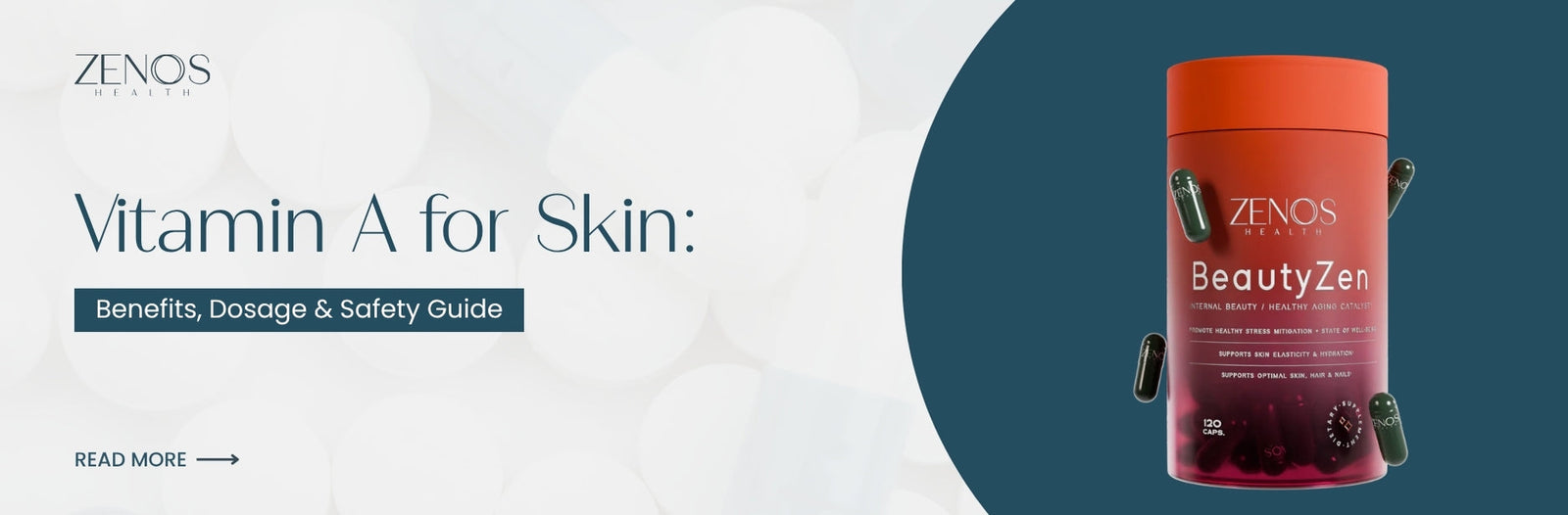
Zenos Health's BeautyZen™ includes Vitamin A as Retinyl Palmitate alongside clinically studied ingredients like KeraGlo® Hydrolyzed Keratin, Passioneo®, and DNAactive® for comprehensive skin, hair, and anti-aging support. Every ingredient is selected for its documented role in skin health, not for label decoration.
Support your skin from the inside out. Shop BeautyZen.







Leave a comment
Comments will be approved before showing up.