

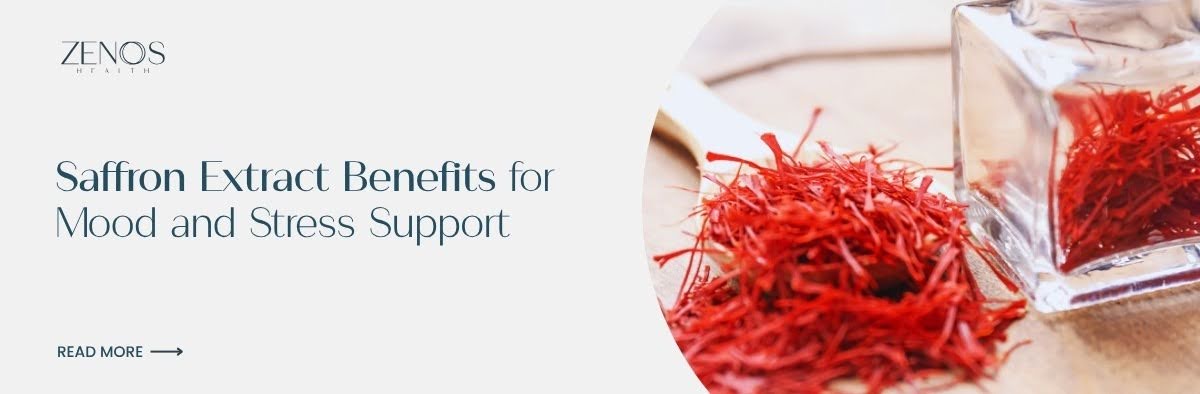

Saffron has been used for centuries as a spice, a dye, and a traditional remedy. What has changed in the last decade is the volume of clinical research now confirming what traditional practitioners long suspected: saffron extract has measurable effects on mood, anxiety, and stress resilience in humans.
A 2024 meta-analysis published in Nutrition Reviews compared saffron directly against selective serotonin reuptake inhibitors (SSRIs), the most commonly prescribed class of antidepressants. Across eight randomized controlled trials, researchers found no statistically significant difference between saffron and SSRIs in reducing depressive symptoms [1]. A separate 2024 systematic review of 46 RCTs confirmed that saffron extract for mood support is significantly more effective than placebo for both depression and anxiety [2].
For anyone searching for a natural saffron supplement for mood support, the clinical evidence is stronger than for almost any other botanical compound in this space. Here is what the research says about how saffron works, who benefits most, and what to look for in a quality supplement.

Before covering the specific benefits, understanding how saffron helps mood at the biological level explains why the clinical results are so consistent.
Saffron's mood-supporting effects come primarily from two bioactive compounds: crocin (a carotenoid pigment) and safranal (a volatile compound responsible for saffron's aroma). Clinical research shows these compounds influence mood through several mechanisms:
Serotonin reuptake inhibition: crocin and safranal help maintain higher levels of serotonin in the brain by slowing its reabsorption, a mechanism similar to how SSRIs work [1][2]
Dopamine and norepinephrine modulation: saffron compounds support the balance of multiple neurotransmitters involved in motivation, pleasure, and alertness
BDNF support: saffron has been linked to increased brain-derived neurotrophic factor, a protein critical for neuron growth and resilience [2]
Anti-inflammatory activity: chronic inflammation impairs neurotransmitter production and is increasingly recognized as a contributing factor in mood disorders

Each of the following benefits is supported by randomized, placebo-controlled human trials.
The most robust evidence for saffron supplements for mood involves depression. A 2024 systematic review analyzing 46 RCTs found that saffron supplementation produced a significant reduction in depressive symptoms compared to placebo, with an overall effect size of -4.26 [2]. Trials ranged from 4 to 48 weeks, with consistent results across different populations and dosing protocols.
What makes this finding particularly notable is the head-to-head comparison with pharmaceutical antidepressants. The 2024 Nutrition Reviews meta-analysis found that saffron performed comparably to SSRIs like fluoxetine and citalopram across multiple trials, without the sexual dysfunction, weight gain, and withdrawal effects commonly associated with these medications [1].
Zenos MoodZen includes Saffron Extract (100 mg), well above the 30 mg dose used in many clinical trials, alongside Phosphatidylserine (600 mg) and Cognizin® (250 mg) for comprehensive mood and cognitive support.
The same 2024 systematic review found that saffron significantly reduced anxiety symptoms compared to placebo, with an effect size of -3.75 [2]. A 2024 study on women with mild-to-moderate anxiety confirmed these findings in a real-world context, showing meaningful improvements in anxiety scores with saffron supplementation during a period of heightened stress [3].
Anxiety and depression frequently co-occur, and saffron's ability to address both simultaneously through overlapping neurotransmitter pathways makes it particularly valuable as a single-ingredient intervention.
A 2021 randomized, double-blind, placebo-controlled trial published in Frontiers in Nutrition tested 30 mg of standardized saffron extract in 56 healthy adults experiencing subclinical low mood and stress. After eight weeks, the saffron group showed significantly reduced depression scores and improved social relationships compared to placebo [4].
The most compelling finding involved the acute stress response. Participants underwent a lab-based psychosocial stressor, and the saffron group showed better maintenance of heart rate variability (HRV) during the stressful task [4]. HRV is a physiological marker of autonomic nervous system resilience, meaning saffron did not just improve how participants felt subjectively; it measurably improved how their bodies handled stress.
Mood, stress, and sleep form a tightly connected triangle. A 2022 meta-analysis of randomized controlled trials found that saffron supplementation significantly improved sleep quality scores compared to placebo [5]. Saffron's effects on serotonin metabolism likely contribute to this benefit, since serotonin is the direct precursor to melatonin, the hormone that regulates sleep onset.
For women navigating hormonal transitions, where disrupted sleep and mood changes often amplify each other, saffron's dual action on both sleep and emotional well-being offers particularly relevant support.
A 2025 randomized, double-blind, placebo-controlled trial published in The Journal of Nutrition followed 202 adults experiencing low mood for 12 weeks. Participants taking a standardized saffron extract showed significantly greater improvements in depression scores on the DASS-21 scale compared to placebo, with a reduction of 2.92 points [6]. The study confirmed that saffron benefits extend beyond clinical depression to everyday emotional well-being in otherwise healthy people.
Saffron is not only for people with diagnosed mood disorders. The research shows meaningful benefits for anyone dealing with persistent low mood, emotional flatness, or reduced motivation, the kind of subclinical symptoms that do not warrant medication but still diminish quality of life.
Not all saffron products deliver equivalent results. Clinical trials use standardized extracts with verified concentrations of active compounds, not raw saffron powder. When choosing saffron supplements for mood, prioritize these factors:
Standardization to crocin and safranal content ensures consistent levels of the bioactive compounds responsible for mood benefits
Dose should meet or exceed the clinical threshold. Most trials used 30 mg of standardized extract, and higher doses up to 100 mg have shown continued benefit without safety concerns [2]
Complementary ingredients amplify results. Saffron works through serotonin pathways, so pairing it with compounds that support cortisol regulation (like Phosphatidylserine) and neurotransmitter production (like Cognizin®) addresses mood from multiple angles
Zenos MoodZen delivers Saffron Extract at 100 mg alongside Phosphatidylserine (600 mg) for cortisol regulation, Lion's Mane (300 mg) for nerve growth factor support, and Cognizin® (250 mg) for cognitive clarity. The multi-compound approach targets mood, stress, and mental sharpness through distinct but complementary pathways.
Saffron extract is one of the rare natural compounds with clinical evidence strong enough to be compared head-to-head against pharmaceutical antidepressants, and the results show comparable efficacy without the common side effects. A 2024 meta-analysis, a systematic review of 46 trials, and multiple placebo-controlled studies in healthy adults collectively demonstrate that saffron supports mood, reduces anxiety, improves stress resilience, and enhances sleep quality.
Zenos MoodZen pairs a clinically meaningful dose of Saffron Extract (100 mg) with nine additional compounds targeting mood, cortisol balance, and cognitive function. Give your emotional well-being the evidence-based support it deserves.





Leave a comment
Comments will be approved before showing up.